866.633.1597
  Mon-Fri 9am-5pm CST



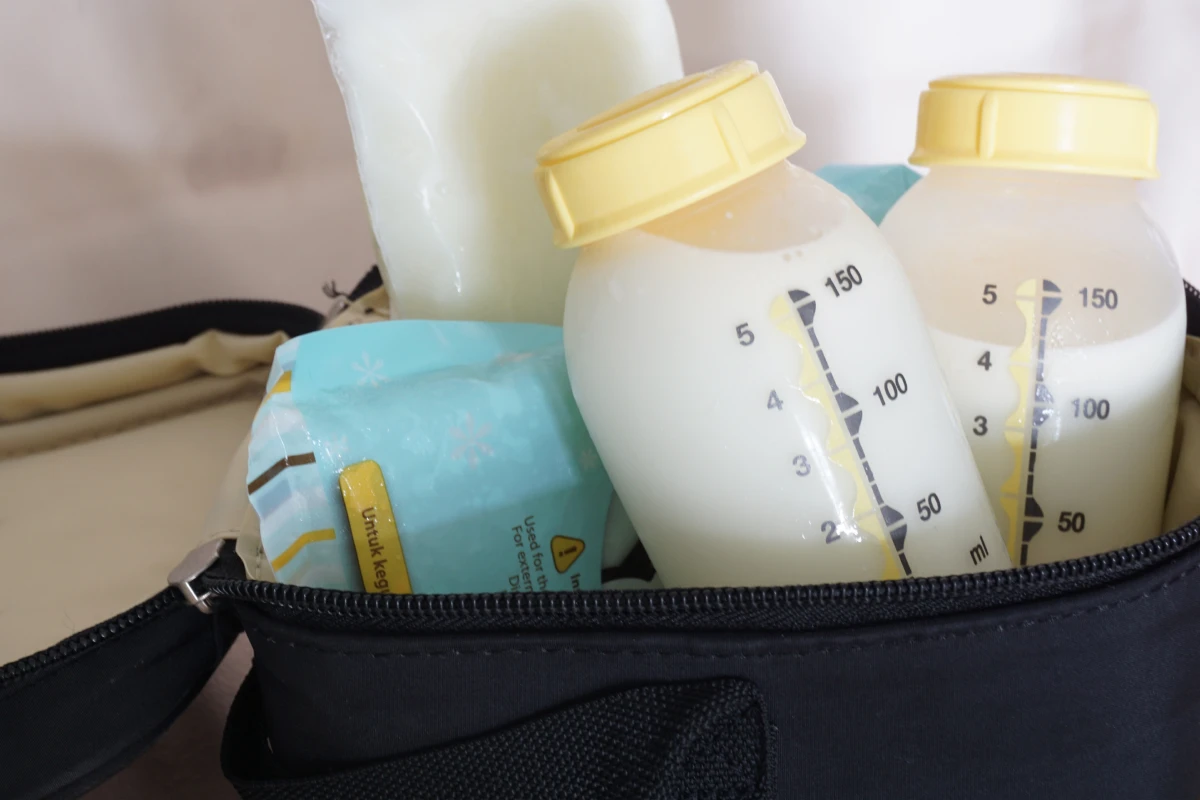
Making your way through airport security is never fun, but if you’re a breastfeeding mom, navigating how to bring your breast pump, breast milk and other accessories through the airport is even more of a challenge.
Luckily, in 2016, President Obama signed the Bottles and Breastfeeding Equipment Screening Act (known as BABES), which explicitly allows the TSA to let mothers bring breast milk, breast pumps related accessories through airport security.
Here are all of the things you need to know if you’re planning on taking your breast pump or breast milk through airport security.
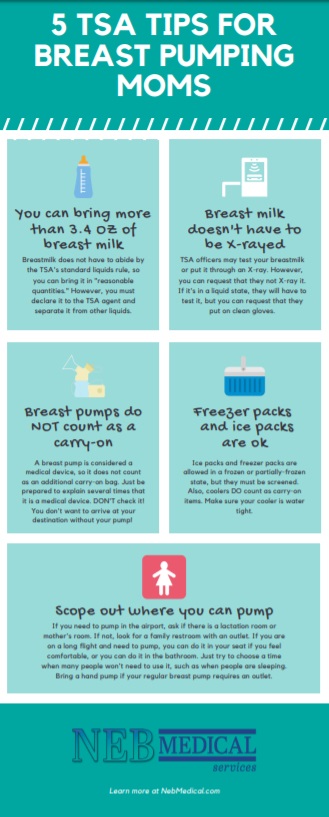
5 TSA Tips For Breast Pumping Moms
You can bring more than 3.4 OZ of breast milk
Breastmilk does not have to abide by the TSA’s standard liquids rule, so you can bring it in “reasonable quantities.” However, you must declare it to the TSA agent and separate it from other liquids.
Breast milk doesn’t have to be X-rayed
TSA officers may test your breastmilk or put it through an X-ray. However, you can request that they not X-ray it. If it’s in a liquid state, they will have to test it, but you can request that they put on clean gloves.
Breast pumps do NOT count as a carry-on
A breast pump is considered a medical device, so it does not count as an additional carry-on bag. Just be prepared to explain several times that it is a medical device. DON’T check it! You don’t want to arrive at your destination without your pump!
Freezer packs and ice packs are OK
Ice packs and freezer packs are allowed in a frozen or partially-frozen state, but they must be screened. Also, coolers DO count as carry-on items. Make sure your cooler is water tight.
Scope out where you can pump
If you need to pump in the airport, ask if there is a lactation room or mother’s room. If not, look for a family restroom with an outlet. If you are on a long flight and need to pump, you can do it in your seat if you feel comfortable, or you can do it in the bathroom. Just try to choose a time when many people won’t need to use it, such as when people are sleeping. Bring a hand pump if your regular breast pump requires an outlet.
We also have a handy infographic for you to download. (Click on the graphic to see it larger).