 866.633.1597
  Mon-Fri 8:30am-5:00pm CST



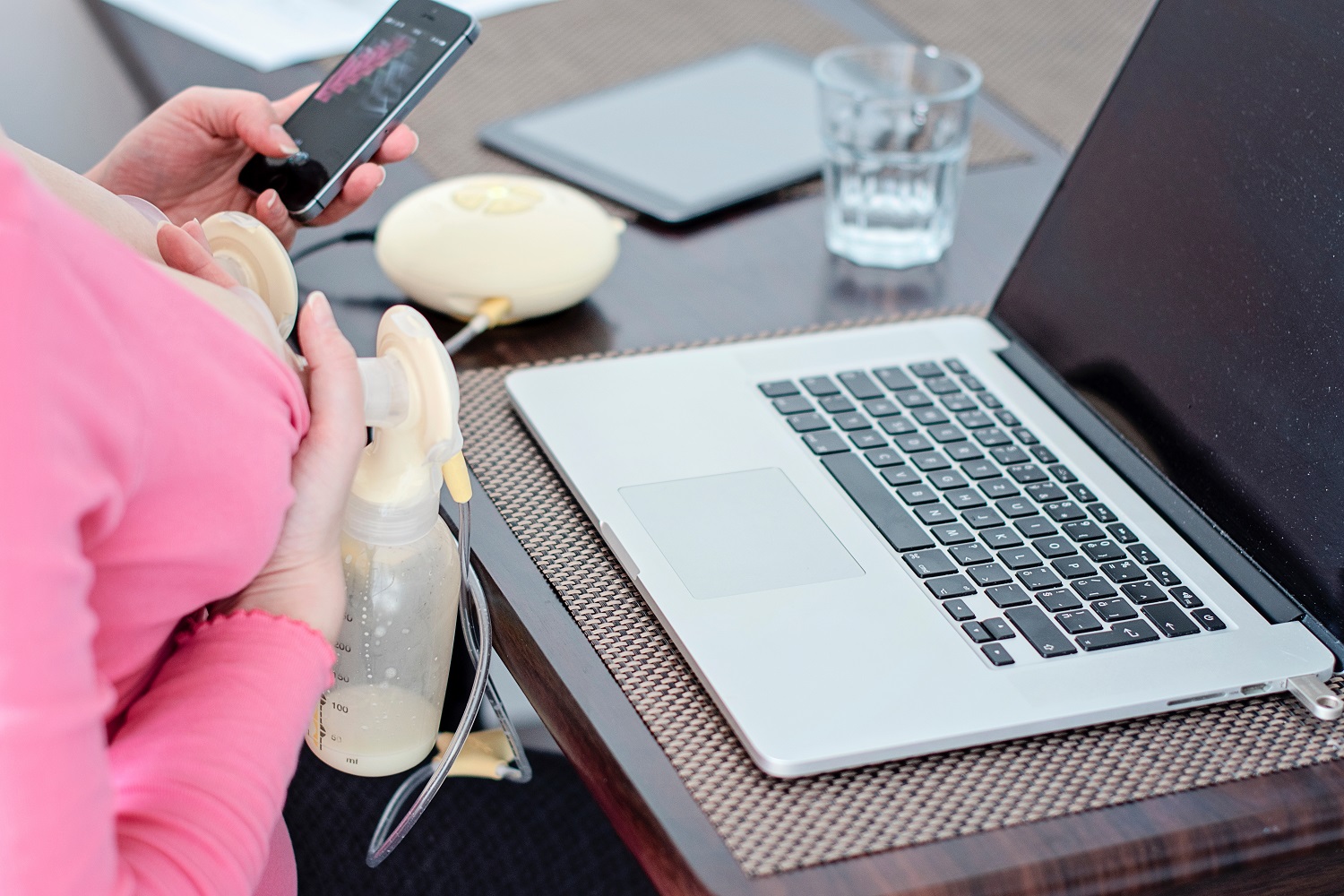
Breast pumping at work or at school can be a hassle, not to mention embarrassing. If you’re pumping while on a phone call, you don’t want the person on the other end to hear what you’re doing, and when you’re pumping in a bathroom stall, it’s better if your co-workers don’t hear strange, loud suction noises coming from inside. And of course, if you have to pump in public, such as on a bus or train, you definitely want to be as discrete as possible.
So if any of those things apply to you, you’ll probably want to find a pump that is as quiet as possible. But how can you determine which pump is the quietest?
Well, rejoice, mama. We’ve done the investigating so you don’t have to.
How Breast Pump Volume Is Measured
First of all, to select a quiet pump, you need to know that sound is measured in decibels, or dB for short. A decibel is 1/10th of a bel (named in honor of the inventor, Alexander Graham Bell).
A normal conversation is typically about 60 decibels, a chain saw operates at about 108 decibels and a jet engine taking off usually is about 140 decibels. Obviously, when we’re talking about breast pumps, we’d want them quieter than that.
Most pumps operate at about 45 decibels, so quieter than someone talking, but if you’re looking for an especially quiet pump for pumping in a cubicle or office, or for discrete use in public or at home, you may want to look for something even quieter.
Putting Decibels Into Everyday Context
Decibels can feel abstract, so here’s a more relatable breakdown to help you understand exactly how quiet (or loud) a pump really is:
- 20–30 dB: A whisper or the gentle rustling of leaves
- 30 dB: The soft hum of a refrigerator in another room
- 40 dB: A quiet library or light rainfall
- 45 dB: A calm, hushed office environment
- 50–55 dB: A quiet conversation across a room or moderate rainfall
- 60 dB: Normal, face-to-face conversation
So when you see a pump listed at 45 decibels, picture the ambient quiet of a library. A pump at 28 decibels, on the other hand, is closer to the barely-there hum of a refrigerator — something you might not even notice in a busy room. This context can help you decide just how quiet you actually need your pump to be for your particular situation.
What’s the quietest breast pumps on the market?
Some breast pump manufacturers, including Phillips, Lansinoh, Unimom and Willow, don’t publish the decibel levels of their breast pumps.
But the many manufacturers that do, typically measure at about 45 decibels.
Some examples of pumps that measure at 45 decibels include:
- Ameda Mya Joy and Ameda Mya Joy Plus
- Cimilre P1, Cimilre S5+ and Cimilre S6
- Medela Swing Maxi
- Spectra 9 Plus, Spectra S1 Plus, Spectra S2 Plus and Spectra SG
Some breast pumps that operate at 48 decibels include:
- Motif Twist (48 dB)
- Ardo Calypso Essentials (46.5 dB)
- Zomee Fit (48 dB)
The loudest breast pumps operate at 50 decibels and up:
- Medela Freestyle (56.8 dB)
- Medela Pump In Style (58 dB)
- Baby Buddha (55-60 dB)
However, there are several pumps that are quieter than average: The Motif Luna is slightly quieter than average at 43 decibels, and the Z2 Hands Free is very quiet at only 40 decibels.
But the all-time quietest breast pump on the market (among those that have available decibel levels) is the Elvie Double Pump, which is listed at a rock-bottom-low 28.3 decibels.
Elvie also makes the Stride, which is intended for wearing under clothing, but the decibel level of that model isn’t publicly available and online reviewers say it’s not as quiet as the Elvie Pump.
A Closer Look at the Quietest Pumps
To make your decision a little easier, here’s a scannable breakdown of what mamas tend to love — and what to keep in mind — for each of the quietest pumps available. Remember, every mother is different, so what works beautifully for one parent may not be the perfect fit for another.
Elvie Double Pump (28.3 dB)
What We Love:
- The quietest pump on the market, closer to the hum of a refrigerator than a conversation
- Completely hands-free and wearable, fitting discreetly inside your bra
- No external tubes or dangling bottles, so you can move freely
Things to Consider:
- Some users report that suction can weaken after extended use or once the milk collection cup fills up
- The companion app, while helpful, can occasionally have connectivity hiccups
- It tends to sit at a higher price point than many other options
Z2 Hands Free (40 dB)
What We Love:
- Very quiet at 40 dB, comparable to a calm library or light rainfall
- Wearable and discreet, making it well-suited for the workplace
- Hands-free design lets you multitask while pumping
Things to Consider:
- As with many wearable pumps, suction may feel gentler than a traditional electric pump
- Wearable cups can be trickier to position correctly than standard flanges
Motif Luna (43 dB)
What We Love:
- Slightly quieter than the average pump at 43 dB
- Strong, hospital-grade suction in a portable package
- A reliable everyday workhorse for frequent pumpers
Things to Consider:
- A handful of users have reported concerns with motor longevity over heavy, long-term use
- It’s not a wearable pump, so it’s less discreet for on-the-go situations
Silence isn’t always golden
The quietest breast pump, though, may not be the best for your needs.
Sometimes (but not always), stronger suction equates to louder sounds, so hospital-grade pumps may be louder than their counterparts.
It’s also worth keeping realistic expectations about the trade-offs that come with ultra-quiet and wearable pumps. Many of the quietest options on the market are wearable, in-bra designs, and these can sometimes offer gentler suction than a traditional plug-in pump. Some mamas also notice that suction efficiency can drop off during longer pumping sessions, or that the collection cups need to be emptied more frequently. And for app-connected pumps like the Elvie, the technology is a wonderful convenience — until the connection drops at an inconvenient moment. None of these are deal-breakers, but knowing them ahead of time helps you set realistic expectations and choose with confidence.
In fact, there are many pluses to take into consideration when choosing a breast pump, including:
- Can I wear the breast pump under my bra or clothing?
- Is the breast pump small or light?
- Is the breast pump battery-powered or portable?
- Does the breast pump have extremely strong suction?
- Is the breast pump covered by my insurance?
Matching a Quiet Pump to Your Lifestyle
Because every mother’s routine is different, the “best” quiet pump really depends on how and where you’ll be using it. Here are a few common scenarios to help you connect noise level to your real-life needs:
Best for the Workplace or Office
If you’re pumping in a shared office, a cubicle or a small private room, discretion is key. A wearable, ultra-quiet option like the Elvie Double Pump (28.3 dB) or the Z2 Hands Free (40 dB) lets you keep working — or even take a call — without anyone being the wiser. The hands-free design is a major bonus when you’re trying to stay productive on a busy day.
Best for Pumping Near a Sleeping Baby
When you’re trying not to wake a napping little one, every decibel counts. A pump in the 28–43 dB range — think the Elvie, Z2 Hands Free, or Motif Luna — sits at or below the hum of a refrigerator, making it far less likely to disturb a light sleeper.
Best for Discreet, On-the-Go Use
For pumping on a bus, train or in any public setting, a wearable pump that tucks neatly under your clothing is your best friend. The Elvie Double Pump and Z2 Hands Free both shine here, combining low noise with a tube-free, bottle-free design that keeps things subtle.
Best for Strong, Frequent Pumping
If output and reliability matter more to you than absolute silence, a slightly louder-but-powerful option like the Motif Luna (43 dB) offers strong suction while still staying quieter than the average pump.
There are a dizzying array of factors and, ultimately, you may decide the quietest pump isn’t what you want at all. Whatever you choose, though, make sure to pick the pump that best fits your lifestyle, budget and needs.
To browse a wide variety of breast pumps, breast pump accessories and other maternity essentials, visit the Neb Medical Shop homepage.

