 866.633.1597
 Mon-Fri 8:30am-5:00pm CST




Key Takeaways
- Pumping a small amount per session is completely normal. Most moms pump between 0.5 oz. and 4 oz. total (from both breasts) in a 15–20 minute session.
- Output varies by baby’s age. Newborns need less milk, so you’ll pump less in the early weeks. Amounts typically increase as your baby grows.
- Frequency matters more than volume. Newborns often need 8–12 feedings or pumping sessions a day, which naturally decreases as they get older.
- Breast storage capacity differs from person to person and has nothing to do with breast size.
- Trust your baby, not just the bottle. Steady weight gain, plenty of wet diapers, and a content baby are the best signs that you’re producing enough.
- Know your red flags. Declining supply, too few wet diapers, or breast pain after pumping are signs it’s time to reach out to a lactation consultant or pediatrician.
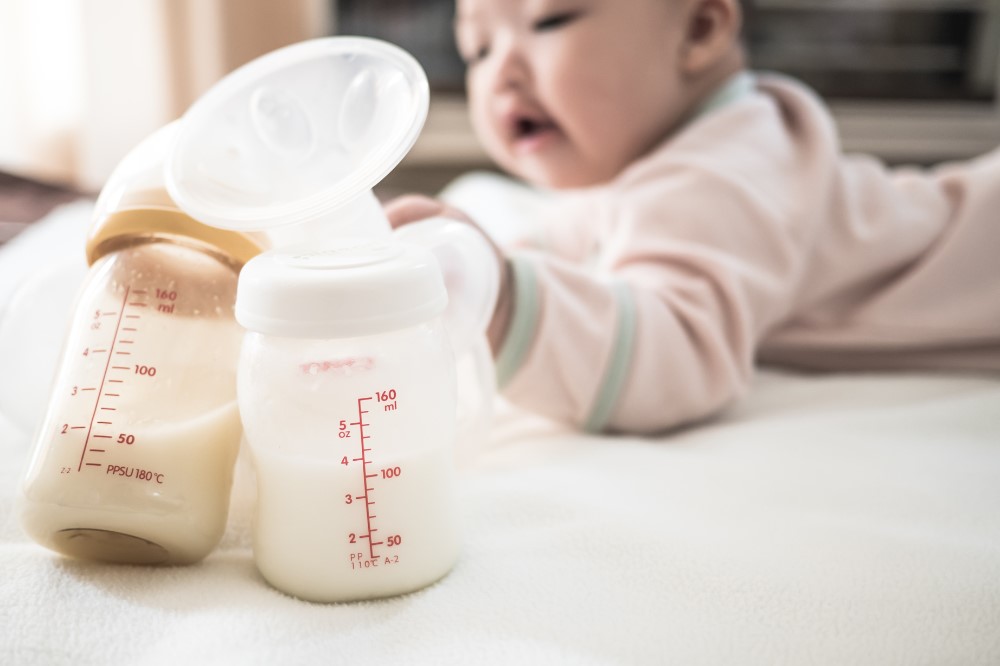
Often, when moms start pumping breast milk, they can get very discouraged when they only see the bottle only fill up to the 1 oz. line or even less per breast. Many times, moms start freaking out, assuming that there’s something wrong with them and they won’t possibly be able to pump enough milk for what their baby needs.
If this is happening to you, don’t panic. Pumping only a small amount per breast in a session is completely normal. In fact, most women will only pump between 0.5 oz. and 4 oz. of breast milk total (meaning coming from both breasts) in a 15 or 20-minute pumping session.
How Much Should You Be Pumping by Baby’s Age?
Because every mother and baby is different, these numbers are general guidelines rather than hard rules. That said, having a rough idea of typical output by age can help put your mind at ease. Here’s a general breakdown of what many moms pump total (from both breasts) per session as their baby grows:
Baby’s Age Typical Pumping Output (Both Breasts, Per Session) Days 1–4 A few drops up to about 0.5 oz. (colostrum phase) Days 5–7 Up to about 2 oz. Weeks 1–3 Up to about 3 oz. 4 weeks – 6 months Up to about 5 oz.
Keep in mind that your output can vary quite a bit from session to session and even from one breast to the other. These ranges are simply a starting point to help you gauge whether you’re in the ballpark of “normal.”
What Can Affect How Much Milk You Pump in a Session?
The biggest factor is usually how much breast storage capacity you have in your breasts. This means how much milk your breasts can hold between feedings (or pumping sessions) and is strictly related to how many milk-producing glands (also known as mammary glands) you have in your breast. This varies from person to person and has nothing to do with how large or small your breasts are.
Having a smaller breast milk storage capacity does NOT mean that you’re not making enough milk for your baby or that you need to supplement with formula. It simply means that you’ll probably have to breastfeed or pump more often than other mothers.
For example, someone with small breast storage capacity might only produce 1 to 2 oz. per feeding, and their babies may feed every 1 to 2 hours. While someone with a large storage capacity may produce 4 to 6 oz. every 2 to 4 hours. (Women with super large storage capacities may pump as much as 8 oz. in a session, but this is very rare!)
However, the average mom produces about 2 to 4 oz. every 2 to 4 hours.
And just because your baby is crying doesn’t indicate that you’re not pumping enough milk. Babies can cry for a lot of reasons, but as long as they are gaining weight, you’re most likely doing fine. But just to give you some peace of mind, here’s how much breast milk babies need by age and how to calculate how much breast milk you need to pump per day.
How Often Should You Pump?
Just as important as how much you pump is how often you pump. In the early days, frequency is what drives and protects your milk supply, so it’s worth paying close attention to.
As a general guideline, newborns typically need to feed or pump around 8 to 12 times per day in the first few weeks. If you’re an exclusive pumper (which means you only feed your baby pumped breast milk rather than nursing directly), you’ll want to aim for roughly 8 to 10 pumping sessions per day during that first month to establish a healthy supply.
As your baby grows, you can usually space things out a bit more:
- Newborn (first few weeks): 8–12 sessions per day
- Around 1–2 months: often 7–9 sessions per day
- Older infants: frequency typically continues to decrease as storage capacity and feeding efficiency increase
Remember, every mother and baby settles into their own rhythm, so use these numbers as a flexible guide rather than a strict schedule. What matters most is responding to your baby’s hunger cues and keeping your supply steady.
In addition to your natural storage capacity, there are other factors that can affect how much you pump as well.
- How old your baby is
- What time of day it is
- How long it has been since your last pumping session or feeding
- How stressed you are
- How well your pump fits
- Whether or not your pump is working properly
Here’s how those things may affect your pumping output:
-
Baby’s Age
Babies who are less than a month old have very small stomachs, so your body won’t produce as much milk in this stage as it will later. Babies who are less than a month old will only drink about 1 to 2 oz. at a feeding. After that, their stomachs will grow large enough to drink about 3 to 4 oz. at a time, and they’ll usually drink about 30 oz. per day.
Here’s the interesting part: once your baby reaches full-term growth, their daily milk intake tends to stay fairly consistent (around 25–30 oz. per day) until they start eating solid foods, usually around 6 months of age. After solids are introduced, your baby will gradually begin getting some of their nutrition from food, so their milk intake may slowly start to decrease over time. Until then, you can generally expect their appetite to hold steady rather than keep climbing with each growth spurt.
-
Time of Day
Did you know that the time of day that you pump can affect how much you produce? According to an article from Ardo, a breast pump manufacturer, morning milk is usually higher in volume than evening milk, and it contains more water and less fat. It also contains higher levels of cortisol — a hormone that promotes alertness. When you pump milk at night, you won’t pump as much, and the milk will be thicker and creamier because it is higher in fat and melatonin to help your baby fall asleep.
-
How Long It Has Been Since Your Last Pumping Session
If you are trying to pump after you just fed your baby, you probably won’t produce as much milk because your milk glands haven’t had a chance to refill yet. On the other hand, if you’ve skipped a feeding or a pumping session, you will most likely produce more than normal. It is NOT a good idea to miss feedings or pumping sessions, however, to get a bigger output. This can lead to clogged milk ducts and can also reduce your milk supply by signaling to your brain that you need to produce milk less frequently.
-
How Stressed You Are
Your emotional state can directly affect your ability to pump enough breast milk. That’s why it’s important to try take a deep breath and try to get as relaxed as possible when you’re pumping. Here are some tips on how to de-stress while you pump.
-
Your Diet and Hydration
What you eat and drink can also play a role in your milk production. Staying well-hydrated throughout the day and eating a balanced, nourishing diet with enough calories helps support a healthy supply. You don’t need a perfect diet to make great milk, but consistently skipping meals or not drinking enough water can affect how much you’re able to pump. Try keeping a water bottle and a snack nearby during pumping sessions.
-
Your Baby’s Hunger Cues and Weight
Your baby’s individual needs are shaped by more than just their age. A baby’s weight and hunger cues are two of the best indicators of how much milk they actually need. A heavier baby will generally need a bit more milk than a lighter baby of the same age, and babies going through growth spurts may suddenly seem hungrier than usual. Learning to read your baby’s hunger cues (like rooting, lip-smacking, or bringing hands to the mouth) can help you respond to their needs rather than relying on numbers alone.
-
How Well Your Pump Fits
If your breasts don’t feel completely empty when you’re finished pumping, you’re probably not pumping as much as you could be. And one cause could be that you don’t have the right breast shield size for your breasts. If you have the correct size, your nipple will be able to move freely inside the flange and your areola won’t enter the tunnel part of the flange. Follow this guide to see if your flange fits correctly.
-
Whether Your Pump Is Working Properly
If you’ve noticed that the amount you have been pumping has gone down recently (and it’s not related to the time of day or how stressed you are), then there might be something wrong with your pump itself. Start by checking the batteries and checking that all of the parts are fitting together correctly. And make sure to replace your valves and tubing on a regular basis so your pump can work at maximum capacity. Here are some things to check if you notice that your breast pump is losing suction.
Understanding “Normal” vs. Oversupply
It’s important to understand what constitutes normal pumping output versus oversupply. While some mothers worry they’re not producing enough, others may be concerned about producing too much. Oversupply (also called hyperlactation) is generally defined as producing significantly more milk than your baby needs consistently over time, not just having one or two high-output pumping sessions.
Signs of true oversupply might include consistently pumping large amounts (6+ oz per session regularly), frequent plugged ducts, breast engorgement, or your baby showing signs of getting too much milk too quickly (like fussiness, gassiness, or green frothy stools). Most mothers fall somewhere in the normal range, even if their output varies considerably from day to day.
Still not sure why you are producing less milk than you used to? Here are some other reasons why your milk supply may have dropped.
When to Reach Out to a Lactation Consultant or Pediatrician
Most of the time, variation in your pumping output is perfectly normal and nothing to worry about. However, there are a few red flags that are worth paying attention to. If you notice any of the following, it’s a good idea to reach out to a lactation consultant or your pediatrician for support:
- A sudden or steady decline in your milk supply that isn’t explained by the time of day, stress, or your pumping schedule
- Your baby isn’t having enough wet diapers (newborns should typically have around 6 or more wet diapers per day once your milk comes in)
- Your baby isn’t gaining weight as expected or is losing weight
- Breast pain, persistent plugged ducts, or signs of infection (such as redness, warmth, or flu-like symptoms), or ongoing pain after pumping
- Pumping continues to feel uncomfortable even after checking your flange size and pump settings
Reaching out early can make a big difference. A lactation consultant can help troubleshoot your pumping routine, check your flange fit, and give you personalized guidance, while your pediatrician can make sure your baby is thriving. There’s no shame in asking for help, it’s one of the best things you can do for both you and your baby.
Practical Example: Calculating Your Baby’s Needs
Let’s walk through a practical example to help you determine appropriate bottle sizes and daily pumping goals:
If your baby weighs 12 pounds and is 3 months old:
– Daily milk needs: 12 pounds × 2.5 oz = approximately 30 oz per day
– If baby feeds 6 times per day: 30 oz ÷ 6 feedings = 5 oz bottles
– If baby feeds 8 times per day: 30 oz ÷ 8 feedings = 3.75 oz bottles (so you’d prepare 4 oz bottles)
Remember, this is just a starting point. Your baby may drink slightly more or less at different feedings, and their needs will change as they grow.
It takes time to get used to breast pumping, so be patient with yourself. The more you do it, the better you’ll get at it. We promise!
Most importantly, trust your body and your baby. If your baby is gaining weight well, having plenty of wet diapers, and seems content between feedings, you’re likely doing great – regardless of what the numbers on your pump bottles show. Every mother’s pumping journey is unique, and comparing your output to others can lead to unnecessary stress and worry.

